
Searching with the word museum on YouTube brought me face to face with potential human docent replacements. Is it possible Museum Life of the future will rely less on people to teach, guide and interact?
There is already a robot docent in Japan that can look into your eyes to see how interested you are as well as how much you understand and will adjust content accordingly:
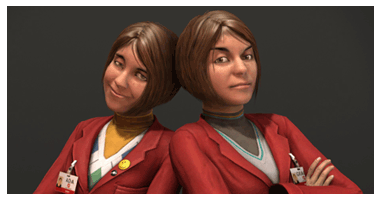
The Museum of Science in Boston currently has the InterFaces project that includes virtual guides Ada and Grace named for early computing scientists Ada Lovelace (1815 – 1852) and Grace Hopper (1906 – 1992). This is an ongoing collaboration with University of Southern California’s Institute for Creative Technologies funded in part by the National Science Foundation. The project includes a Living Laboratory to use visitor hypotheses and feedback to continue development of the technology. Using speech recognition and analysis these guides can answer your questions and make suggestions. Here they are with a group of kids:
The avatar look of these guides makes it clear they are virtual, but some companies are taking the next steps to use human representations such as those you see “speaking” to you on websites within physical spaces. Combining the human appearance with interactive abilities is suggested for sales situations, conferences and yes- museums. NuMedia Innovations, Inc calls “nuV-Host” a fully interactive virtual mannequin and cites “no recurring costs for talent or staff” as a benefit.
Here is one in action in Norway:
Will this just be another technology that enhances what people do, or could it actually replace some functions? I would like to find more examples in place in museums and to inquire about visitor reaction as well as retention of information provided, particularly comparing age groups. It wasn’t mentioned, but saving stored data on the questions asked and areas of interest that could be reviewed and reported would be extremely useful in planning and project evaluation.
On the other hand they have not addressed the human ability to hear 12 questions at once from 30 fourth graders, and to gracefully create answers that address everyone while walking backwards and knowing you have 3 minutes left to get everyone back to the entrance so they don’t miss their bus….
It is easy for me to envision these interacting with visitors at learning stations and they could certainly help in getting more information across to more people at once. But would visitors feel they are missing anything without “real” human conversations? Would you?
 Museum Life