Museum Life: Oh Behave!

Day 3 of my adventure in getting to the core of museum work led me to two articles. The first, “How to Behave in an Art Museum” by Timothy Aubry, and a response,  “Let the Little Children: How to Behave in a Museum” by Bob Duggar. I was intrigued because they both cite museums as places of reverence, albeit reverence defined differently across generations and individuals.
Staff at the Museum of Science & Industry Chicago

Both discuss how visitors behave in museums, but as I find is usually the case, no mention is made of staff. Museums are portrayed as they often are- institutions that exist as concepts as much as physical spaces- designed and run by people not well-known by the public yet holding tremendous power in defining each experience. The institutions are presented without reference to the individuals that chose how to design the space, what words to put on the labels and what food to serve at the casual MoMA Friday night event.

Likewise, how many hours have I spent with colleagues discussing the democratization of museums, or the shift toward education that came with Excellence and Equity in the 90s, without a visitor in sight? Having been immersed in work as an administrator the last decade of my career, I yearn for more direct interaction with visitors and their analyses of experiences such as Aubry and Duggar present .

When I worked as a docent or in a museum store, I loved the immediate feedback I could get about visitors’ experience. Yet doing the “front line” work left little time to record reactions consistently or in a way that was used to analyze or make decisions moving forward. While the person at the ticket counter or in a gallery knows more about visitors than any other staff member,  in my experience ongoing documentation to share across departments is rare.

There is of course a large body of  literature and research regarding museum visitor behavior.  However, my non-scientific Google search tonight first revealed lists of rules for behavior at museums – mainly written in the negative- such as “don’t touch”, “don’t run” and my favorite “keep ample distance between yourself and artworks”.

Further down the search was an AAM published study by Edward Stevens Robinson in 1928 recommending museum directors become “experimental psychologists and undertake behavioral inventories”  and Kevin Coffee’s 2007 audience research paper that asserts “museum use is an inherently dialogic and social practice- sets of actions and cognitive processes that are enacted in response to, and within, specific socio-cultural contexts and within specific social relationships”.  In my experience the two-way social relationship between visitor and staff is less explored. Nonetheless, we as museum professionals often behave as if we know what is best for visitors or create statistics donors, funders, boards and we ourselves want to see.

While we have moved guest book comments to Facebook pages, and we can scan the Internet for articles such as these found today, I wonder if dialog between staff and visitors is recorded and used regularly across museums? Having just reviewed grant applications for IMLS funding, I found a few focus groups or taking surveys on site often presented as the full extent of a museum’s visitor research. Even at recent professional conferences, the sessions I attended presented communication as overwhelmingly one way from staff to visitor, and did not maximize existing social networks or technology as informative tools.

Hopefully this walkabout will reveal recent research and practical applications of innovative ways museum staff and visitors communicate with and influence one another’s behavior…  I plan to follow Duggar’s advice:

“Maybe we should look to the children for the right way to enter the paradise of museums. …..  with the same wide-eyed wonder as they do—a mix of curiosity and fearlessness with a healthy dose of admiration.

 

Museum Life: Day 2 Walkabout

So in a process like this one is supposed to take cues from dreams and signs. My dream last night took me back to a grad school classmate who had become a salesperson for a bar code company. She was working hard to convince me to purchase said system for the collection of books in the unidentified museum where I worked.

Enter a coworker from UC Berkeley who was responsible for analyzing bar code systems for possible use in managing our collection of 3.8 million artifacts and a newly organized library of hundreds of books. The two of them debated when I heard shouting outside only to find people arguing in a street next to a 1950s baby blue sedan. They suddenly flicked a cigarette into dry bushes and a wildfire spread immediately down the embankment and toward the building where we stood. We ran up a circular staircase to get out and all I could think about was “bar codes don’t matter if the building is gone”!

While waking up and analyzing that I decided to check Facebook for possible inspiration or signs and found these three posts at the top of my feed in this order:

1) From Disneyland: Walt Disney once said, “Disneyland is like Alice stepping through the Looking Glass; to step through the portals of Disneyland will be like entering another world.”

2) From Gregory Crosby (poet/former Las Vegan now in NYC) : There’s the Statue of Liberty,/And there’s the United States of America,/And America’s holding the Statue of Liberty up in the air/Just exactly the way a grinning actor holds up his Oscar. –Frederick Seidel, “Istanbul”

3) From NPR: “Weird Al’s Advice: Follow Your Muse To Grow Up”

These posts actually work together for my mind as signposts for this quest of mine. First, Disneyland is part of the reason I believe in combining entertainment and education in museums. I lived near LA for part of my childhood and trips to Disneyland never disappointed. Even as a child I thought Walt Disney was genius in creating a place that brought people together from around the world and managed to teach some concepts and ideas while they rode rides and ate crazy foods. I have often joked that “It’s a Small World” was the root of my interest in comparative Anthropology. But if I’m getting back to basics perhaps it’s not such a joke.

As far as today’s quote I can’t tell you how many times I said I felt like Alice when immersed in aspects of museum work that to me felt removed from the mission and/or pure logic (such as worrying about bar codes when you don’t have a fire suppression system or Disaster Preparedness Plan?!)

The Statue of Liberty quote ties into my idealism about this country and my idea that museums can help keep the melting pot from boiling over. The story of my grandfather arriving at Ellis Island came alive to me as a kid during the Bicentennial hoopla in 1976. As our school choral reading group wore red white and blue (the girls had Holly Hobbie inspired dresses) and recited “The New Colossus” in its entirety, I was as proud as child could be to have that Statue mean something to my family and to embrace patriotism. Seeing the statue in person and being able to research the records and images from Ellis Island is still a gift to this country that I believe we should preserve.

 Finally, Weird Al. I happen to share a birthday with him and have always been a fan of his satire and thought he was another genius in being able to interpret someone else’s work in a funny way and get paid for it! His interview on NPR is about his new book for children that uses Seuss-like rhyming to inspire kids to follow their passions and to realize they have as many options as they can dream. He pays homage to his Dad who used the cliché but ever so  true line that true success comes from doing work that you love. My parents said those words as well, and my Dad always told me I should write a book for kids…..  I’m liking these signs so far and it’s only Day 2!

I’ll leave you with the words of Alice-

I wonder if I’ve been changed in the night? Let me think. Was I the same when I got up this morning? I almost think I can remember feeling a little different. But if I’m not the same, the next question is ‘Who in the world am I?’ Ah, that’s the great puzzle!

Check out the British Film Institute’s restored copy of the first Alice in Wonderland movie !

Museum Life: Mid Museum Life Crisis

It was 1989 when I first entered  The Heard Museum as a museum professional in training, idealistic to the hilt and ready to save the world in the environment I believed combined all of my passions perfectly. Since then I have held positions from docent to director in institutions as varied as you can imagine in size, focus and degree of adherence to defined museum standards. It has been a hugely fulfilling albeit challenging career.

Now, in 2011, I am unsure. Unsure about the ideals that first pushed me to the work and how they fit into the realities of museums as the political and personal entities that they are. Unclear whether my efforts, often not measurable or quantifiable, have made a difference in the grand scheme of things. Unable to express my true opinions about many museum topics because I have spent decades being neutral for the sake of balanced presentation. And uncertain how or even if the second half of my life can be used for the good of the field.

So I’m designing my version of a Walkabout, or even a Vision Quest if you will, to look around and redefine my Museum Life. Since I’ve spent more time working than anything else, the museum world is the lens that’s most useful to peer into an overall midlife evaluation on all levels physical, intellectual, emotional, spiritual and financial. My hope is that the process will bring some clarity of opinion and goals and direct my passion for the next chapter.

For the next 365 days I will spend one hour a day exploring what museums do through memories, random or directed research, suggestions from others, references I pick up from any source, or as a visitor. I won’t structure or design the topics except to follow whatever lead I have that day. Each day will be documented here.

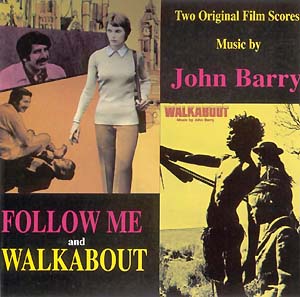
For today I just Googled “Walkabout” and was led to the 1971 movie and found this clip and a good theme song!

I then tried “museum” and “Vision Quest” and found this Lakota Museum which is part of a school in South Dakota.

These searches both bring me back to my Anthropology studies and  first assigned work at The Heard which was teaching kids about Native American culture in order to show how all human beings have families of some kind, use storytelling, music, dance and design to express ourselves. For me that meant we are more alike than different, and in my mind museums were meant to bring people together to discover new things about the world and themselves and to learn to live and work together with respect. It really was that simple to me then, and the core of my intention.

What are you exploring in your own life? Do museums provide any assistance for you as you wrestle with questions? I ask you to join me on this journey and give any feedback or suggestions you might have!

Museum Life: Behind the Curtain

Lately I’ve been thinking about museums founded by or for well-known individuals. Media is buzzing about a proposed Jackson Family Museum in Gary, Indiana while relatively new facilities such as The Lucille Ball Desi Arnaz Center and the Muhammad Ali Center have 5 years of operation thus far.  Yet the 42-year-old Roy Rogers Museum recently closed, the group working on a Debbie Reynolds Museum just filed bankruptcy, and last week the Liberace Foundation announced the Liberace Museum in Las Vegas will close its doors after 30+ years of operation. Meanwhile Graceland continues to attract visitors decades after Elvis left the building. The structures for such places range from nonprofit to for profit to a mixture of both. While the museum profession requires that an institution be a nonprofit and open to the public to earn the name, there is no legal responsibility to the word itself.

C.W. Peale, founder of the Philadelphia Museum

The reasons these institutions are created vary from altruistic philanthropic legacy to tax breaks to pure unadulterated ego and attention to which a celebrity is accustomed… often these are combined. If you expand the definition of celebrity to include well-known figures in general, many U.S. museums owe their founding to big names with a personal mission– think Andrew Carnegie and  Solomon Guggenheim.

While my capitalist self would not suggest stopping anyone who can establish a museum, my nonprofit/government professional self suggests they question in-depth whether they should. When personally focused organizations are founded, either the celebrity or people very close create a passionate message about just how much the world needs the new organization. I’m sure some genuinely care about the philanthropy, but can also be financially dependent and remain on board with whatever will continue their income. Whether or not the museum benefits society in any way (and I believe that it should) is completely dependent upon the people who run it… no institution exists without the individuals who often end up as mythical as the Wizard despite the cultural and financial power they hold. In some cases, benefits abound. In others, they are difficult to discern.

I believe now more than ever we as a society need to pay attention to what is behind the curtain and participate in the dialog about the management of nonprofits in general and museums in particular. While IRS guidelines and state regulations exist regarding establishing and running nonprofits, proactive analysis by government agencies does not. Indeed doing so is debated due to what some term “immeasurable benefits” that are difficult if not impossible to quantify .

Yet on the individual level, how many of us as donors use sites such as GuideStar to research who is handling the money and making decisions in these organizations? Do we offer feedback when we like or don’t like what is offered to the public?  How many of us as employees speak out if we uncover improper behavior, despite the fear or reality of losing our personal livelihood?

The American Association of Museums has an accreditation program, but it is voluntary, requires a fee, and there are no negative consequences if a museum is not accredited. I have never heard that a visitor walked away or a donor based a decision on whether or not a museum is AAM accredited. Codes of Ethics are also widespread in the profession, but again people are not rewarded or punished for following or not following them in any meaningful way. Only if a law is broken and publicly discovered will you hear that an institution suffers a penalty. Likewise we do not yet have a formal mechanism to recognize or reward the “stars” of the nonprofit world for exhibiting ethical behavior and managing resources well

Many voices are proposing stringent analysis, even a social sector “stock market” of sorts that uses an economic model to measure ROI. But for now we should urge any nonprofit museum Board to ask itself these questions and make their answers publicly available:

1. Why are we legitimate in seeking or maintaining nonprofit status?

2. Do our bylaws clearly define our purpose and responsibilities? Have our Board members signed a copy?

3. Is our Board the most representative and qualified group of people we can find, and how will we ensure they receive ongoing training regarding their responsibilities?

4. What experts will we rely upon for consultation and advice?

5. Does this business model make sense to people who (gasp) do not care about the subject matter as much as we do?

6. What are the qualifications of the people we will entrust to run the organization? How will they be trained and evaluated regularly?

7. How will we report what we do on a regular basis to the public and the IRS?

8. Is our income model diverse and responsive enough to mix earned revenue, fundraising and investments in reasonable proportion?

9. Is our expenditure model participatory, flexible and prudent? Do we budget for both short and long-term goals with priorities clearly delineated?

10. How can we keep the museum relevant and therefore sustainable for years to come?

Museums are an attractive form of philanthropy, particularly for those in the public eye.  But now more than ever we need to take stock of these institutions in measurable ways.  Matthew Bishop and Michael Green write on page 277  in Philanthrocapitalist: How the Rich Can Save the World:

In turn, the media, politicians, and civil society should engage constructively in the debate about the proper role and the impact of philanthropy—and if they are wise, philanthropists should encourage and lead that debate, rather than wait until something (presumably bad) makes them the subject of it. Philanthrocapitalists are destined to be increasingly important public figures; so they had better get used to it.

Find Out More:

AAM Accreditation: http://www.aam-us.org/museumresources/accred/index.cfm

Philanthrocapitalist Website: http://www.philanthrocapitalism.net/

BoardSource- excellent resources for Board training: http://www.boardsource.org/

Museum Life: To the Moon!

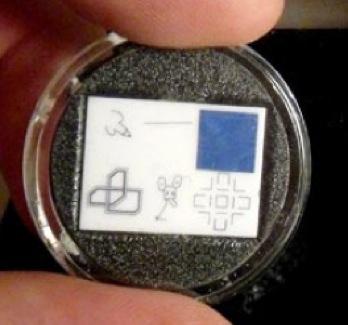
So I just read  about the possibility that a mysterious engineer from Grumman Aircraft Engineering Corporation saw to it that a ceramic chip containing mini artworks by well-known artists made it to the Moon on Apollo 12 in November, 1969.

Artwork on the Moon?

According to the story, New York artist Forrest “Frosty” Myers worked with Bell Labs scientist Fred Waldhauer to imprint images of his own (a linked symbol) as well as those by Andy Warhol (his initials as a “rocket”), Claes Oldenburg (a Mickey Mouse), David Novros Robert and Chamberlain (representations of circuitry) , and Robert Rauschenberg (a single straight line). One was supposedly attached to the lunar module before flight, while others were kept here on Earth.

History Detectives on PBS looked into it for the Season 8 opening episode airing tomorrow, June 21st.  They spoke with Florida art curator Jade Dellinger, who bought one of the purported copies in an online auction, searched out lunar module pilot  for the mission, Alan Bean, and visited the Cradle of Aviation Museum in Long Island. The missing link is someone using the name “John F.” in a telegram which stated that the art had made it on board.  We still have no definitive proof either way at this point.

What is true is that astronauts and space mission crew absolutely did send items to the Moon that had no official part of the mission. Sometimes with permission, sometimes without, personal belongings such as photos and mementos, even golf balls courtesy of Alan Shepard, launched with lunar modules and remain on the Moon’s surface today.

"The Fallen Astronaut" installed on the Moon

One astronaut who contributed to the Moon Museum phenomena in a known way is a former childhood neighbor of mine, Colonel David Scott. As it turns out, the year before my father was transferred to Edwards Air Force Base and moved us into a house across from the Scotts, the Colonel had commissioned the “Fallen Astronaut” sculpture by Belgian artist Paul Van Hoeydonck . As Commander of the Apollo 15 mission, he placed the aluminum sculpture and plaque bearing the names of fallen astronauts from the U.S. and Russia on the Moon on August 1, 1971. Funny his son Doug and I never talked about this while riding our bikes around the neighborhood 🙂

Beyond artwork, space exploration has left over 300,000 pounds of artifacts on the Moon including robots, vehicles, spacecraft, and flags planted firmly into the ground. While we can go to museums such as Air & Space to see photos and replicas, there is also a movement to preserve areas of the Moon as State, National and UNESCO World Heritage Sites. The Lunar Heritage Project at University of New Mexico, funded in part by a NASA grant to the New Mexico Space Grant Consortium, has documented 106 pieces at Tranquility Base including Neil Armstrong’s portable life support system, Buzz Aldren’s space boots and a silicon disc with greetings from 74 nations. The project proposes that we should preserve the collection and archaeological site as we do such cultural remnants here on Earth for the benefit of future generations.

In January of this year, California became the first state to name the items left at Tranquility Base as an official State Historical Resource through a unanimous vote by the eight-member California State Historical Resources Commission. Texas, New Mexico, Alabama and Florida are working toward the same goal.

All along I have had an international eye on Museum Life.  Perhaps its time to go intergalactic.

Happy Father’s Day Dad and Colonel Scott!

Find out More:

http://cradleofaviation.org/ Cradle of Aviation Museum has a Grumman Lunar Module LM-13

http://www.nasm.si.edu/ National Air & Space Museum has a replica of the Fallen Astronaut

http://www.pbs.org/opb/historydetectives/ History Detectives on PBS “Moon Museum” Episode premieres June 21st

http://spacegrant.nmsu.edu/lunarlegacies/ Lunar Legacy Project at University of New Mexico

Museum Life: Who Do You Think You Are?

Last weekend I was browsing On Demand selections for some mindless downtime. I ran across the show called “Who Do You Think You Are?” that airs on Friday evenings 8/7 Central on NBC. Mindless it was not, and I ended up watching every episode in a mini marathon. If you haven’t seen it, the premise is that in each episode a celebrity embarks upon a journey to research his or her heritage, usually with an unanswered question or mystery about someone in their family tree. The results are funny, tragic, suprising and ultimately life changing for each person.

The show is based on a British documentary show of the same name which has been on for about 7 seasons. The main U.S. partner is ancestry.com, the genealogy site that has some brilliant marketing minds behind it. Their campaign about your family tree starting with a leaf (a connection) on the site makes family research accessible. The show has celebs use the site and show just how easy it is to start looking for your family.

What I especially love is the front and center place occupied by museums and libraries in every episode. From tiny historical societies to the Louvre, we see archivists, curators, librarians and historians working with patrons on camera the way they do every day in their institutions. They bring out the tools of the trade– census records (did you fill yours out?), baptism logs, city directories, photographs, correspondence and even good old microfiche to help piece together the story step by step. It is inspiring to see research pros depicted as interesting people who enjoyed opening the doors to the past. It was equally inspiring to watch celebrities represent the excitement and shock we often see in museums when people learn just how much information is readily available if we just take the time to look.

The celebs featured thus far have been Matthew Broderick, Sarah Jessica Parker,  Brooke Shields, Susan Sarandon , football star Emmitt Smith and Lisa Kudrow who is also an Executive Producer of the show. I won’t give any exact spoilers if you haven’t watched, but what people uncover includes ties to colonial battles, World Wars, the Holocaust, Salem Witch trials, polygamy, a speakeasy, the Gold Rush, rape by a slave owner, Native American ancestry and direct ties to French royalty. In other words, American history.  Dare I say immigrant history? And it each case, you see a side of the famous folks that I find refreshing. They step outside of themselves and learn about sacrifices previous generations made that helped pave the way for the success they have today.

Museums strive every day to make history personal, to justify the preservation of artifacts and archives as tools for all of us to explore our past in order to understand ourselves and the world.  But they can also struggle with linking popular culture and academic pursuits in order to reach broader audiences. This version of reality TV can be a way to inspire research and family dialog while deeply personalizing chapters in our country’s history. If it takes celebrities and television to get more people interested in Museum Life… so be it!

The final episode of Season One is this Friday featuring Spike Lee. I can only imagine who he will find in his tree….

Find Out More!

Watch all of the past episodes online: http://www.nbc.com/who-do-you-think-you-are/

Start Your Own Family Tree and get a DNA Test to find ancient cousins: http://www.ancestry.com/

Who Do You Think You Are on Facebook: http://www.facebook.com/nbcwdytya

Museum Life: Yes- A Leprechaun Museum!

Happy St. Patrick’s Day! In honor of my Irish heritage I bring you one of the newest museums on the planet…. The National Leprechaun Museum which opened in Dublin last week.

Irish furniture maker Tom O’Rahilly founded the museum to capitalize on what has become a national symbol, albeit a negative one from the perspective of many Irish, and to explore the origins of the tales of those little people dressed in green. He shelled out millions from his own pot of gold to do so.

Becoming the size of the wee ones

According to reports visitors will enter a passage that “shrinks” them to leprechaun size. I’m having flashbacks of Disneyland when I thought riding in a little car that made me the size of cells to learn about science was the coolest thing in my 7-year-old world.

In addition, the Museum  uses 3-D illusions to recreate neolithic sites such as Newgrange and of course has its own Rainbow Room. The newsletter sign up form says it will keep you apprised of he latest leprechaun sightings. 

Whether part of ongoing folk tales, poems by Yeats, or dancing on television selling magically delicious cereal, the leprechaun is forever associated with Ireland. Some continue to fight against  such cultural stereotypes. While this may or may not fit the definition of a museum by professional standards, I applaud the attempt to use humor and education to look the image in the face rather than deny it. Given my own professional history, I also seen nothing wrong in finding new ways to engage tourists. When people take on their own history from all perspectives and invite others into the dialog, the layers of interpretation are enriched.

Now go have a green beer….

Find Out More!

The National Leprechaun Museum website http://www.leprechaunmuseum.ie/

Tom O’Rahilly’s design company Rua http://www.rua.ie/

Museum Life: What Are They Doing in That Gallery?

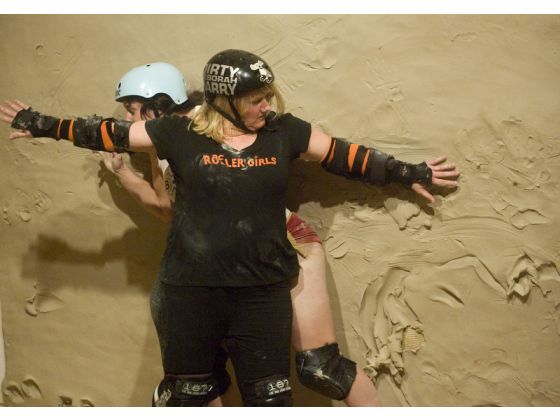
Lately the museum stories catching my eye are about galleries being opened to performance art of all types. Last month the Laguna Art Museum in southern California hosted roller derby girls who helped artist Jocelyn Foye create clay pieces by throwing each other into the walls. A DJ, beer and popcorn rounded out the night.

An Orange County roller girl at Laguna Art Museum

Last week the Guggenheim in New York sold out two performances by band Animal Collective in collaboration with artist Danny Perez. As described on the museum website, they set out to create a site-specific performance piece that will transform the museum’s rotunda into a kinetic, psychedelic environment. Transverse Temporal Gyrus will feature original recorded music composed specifically for the event along with video projections, costumes, and props, rendering the band members and performers into intense, visual abstractions. Visitors were invited to interact in the gallery as part of the piece. 

Animal Collective with Perez

 The Berkeley Art Museum at the University of California has a new Friday night L@TE series with performances, music and drinks which this week will include, according to BAM, a live video feed of physically challenging “actions” performed by professional dominatrix, champion submission wrestler, and local artist Jennifer Locke…. wondering if I should ask why actions is in quotations or just go see for myself?!

 Artists making art in museums and using visitors to participate in the creation is in my opinion one of the best uses of public space. While parameters are broadly designed, the experience is not directed by curators, educators or docents. It allows museum professionals to hand over galleries and get out of the way to see what happens when a unique group of people in a specific timeframe interact with whatever is around them… preferably wearing roller skates.

Find Out More! 

Laguna Art Museum http://www.lagunaartmuseum.org/ 

Guggenheim New York http://www.guggenheim.org/new-york 

BAM L@TE Friday Nights http://bampfa.berkeley.edu/about/late

Museum Life: Virtual Day of the Dead

muertos159 As Halloween revelers nurse their multi-sourced sugar hangovers and (if they don’t live in AZ) relish  the extra hour of sleep, attention turns to Dias de Los Muertos,  All Souls Day,  Samhain, or whatever you choose to call the time for remembering, honoring and placating those who have died. In Museum Life, Death is a constant companion. We are keepers of history through artifacts, stories or even human remains themselves. We make connections between the present and the past through every exhibition and program. For many of us in the profession, we hope those connections stir the emotions as much as the mind. In my experience no topic has more potential to elicit deep-seated feelings than death and how humans choose to handle it.
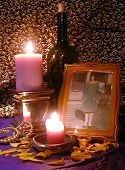
 The Oakland Museum in CA has a long tradition of commemorating the Day of the Dead. This year however, the museum is under renovation and is closed. So the staff found new ways to keep the dialog going.  This week I attended an off site program with Lisa Lemus of the museum’s Los Dias de los Muertos Committee. Part of a seven week series on death at Grace North Church in Berkeley, this talk had Lisa  explain how she uses traditions of her Mexican American heritage to create an annual gathering for friends and family to honor people who have died.  She creates an ofrenda or altar in her home with photos, candles, representative objects and favorite foods of the departed.  ofrenda

Guests are asked to bring their own contributions for the altar while they spend an evening enjoying food, music and memories. After hearing her story and viewing an altar she made for that night, all of us were invited to stand in a circle, light a votive, and offer words of remembrance for someone.  We heard about parents, siblings, friends, lovers and even a mean uncle whose niece hoped he was now happy. Here was a group of strangers, potentially embarrassed to share the complexity of loss, instead instantly aware of our commonality. To end the exchange, we went around the circle once more and said just one word to express whatever we felt. The list included community, gratitude, regret, hope, memory and my word–peace.

Lisa closed by telling us about the virtual Day of the Dead celebration online created in this year’s absence of a physical museum space. We all can visit the site, add to a virtual ofrenda, and publicly participate in emotions that are oftentimes kept private via our personal or cultural constraints.  The museum utilizes Ning, an open source platform anyone can use to create a social network. It provides a public destination, a structure, historical background, project ideas and archival capabilities. We as visitors provide content, creativity debate and emotion.  The outcome is ever-changing, building and growing through the unique contributions we make.

As Museums experiment with ways to use technology to create meaningful exchanges, this model  provocatively combines all of the elements of learning and social networking. This is truly a paradigm shift for museum programming and uncharted territory that will change Museum Life forever.

What souls will you honor on this Day of the Dead? What museum and what technology might help you do it?

Learn More!

Oakland Museum’s virtual Day of the Dead http://diasdelosmuertos.ning.com/

Join Museum Life Ning Network and share your thoughts on Museums & Death  http://museumlife.ning.com/

Attend the last lecture of Fond Farewell Series 11/4 and a Green Funeral Fair 11/7 in Berkeley, CA: http://www.gracenorthchurch.org/farewell.html

Museum Life: Mad Men and the Met

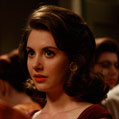
I love it when museums are referenced on television. Last night it happened when I was watching the season premiere of Mad Men on AMC. Mr. corporate climber Pete Campbell (played by Vincent Kartheiser) gets news of a promotion and runs to have his “girl” get his wife Trudy (played by Alison Brie) on the phone.  Trudy is thrilled that her man’s ambitions are being realized, but needs to rush along because she is hosting a luncheon at their home  for the docent council from the Metropolitan Museum.

Docent Trudy
Docent Trudy

The shot then scans the room and we see well-heeled ladies waiting patiently. When Pete tells Trudy he forgot to ask if he is getting a raise, Trudy says that is noble and proves you don’t need money to be fulfilled. Pete responds with something like “don’t let the ladies from the Met hear that”. In one quick scene we get the message that being a docent  is woman’s work, is proper for the wife of a young exec and implies money and prestige.

The word docent means university lecturer in most countries. It is used in the U.S. to mean a trained educator that provides information and/or conducts research on a museum collection. The role can provide a social network as referenced on Mad Men. Other motivations include love for a topic, the desire to teach, or a way to become part of the museum profession. Docents are usually volunteers (so having another source of cash definitely helps) and still often women.  But there are also many men and age groups from teens to retired that provide this public face for museums worldwide. 

Today the Met has 11 options for docent service. If your application is accepted, you go through a year of training before having a place in the rotation. Required commitment varies widely across museums, but being a docent is a great experience. There is nothing like seeing the “a-ha” or “really?” looks on people’s faces as they learn something new or stump you with a tough question.  If you want a great way to give back to your community, contact your favorite museum and join the part of museum life cool enough to be mentioned on Mad Men 🙂

The Met Docent Program: http://www.metmuseum.org/visitor/faq_volunteer.htm

Mad Men Yourself-seriously, try it!! http://www.amctv.com/originals/madmen/madmenyourself/